Wood vs Plastic vs Bamboo: Which Chopping Board Is Right for Your Kitchen?
Your chopping board probably gets more abuse than almost anything else in the kitchen. It takes the knife, the hot water, the tomato stains, the garlic smells and whatever else you decide to throw at it, so the material you choose makes a bigger difference than its humble job suggests.
Wood, plastic and bamboo all have their advantages, but which one makes the most sense for your kitchen? We'll compare hygiene, knife-friendliness and everyday maintenance, look at why claims about wood being “self-sanitising” need some context and explain how to keep your new board in good condition for longer.
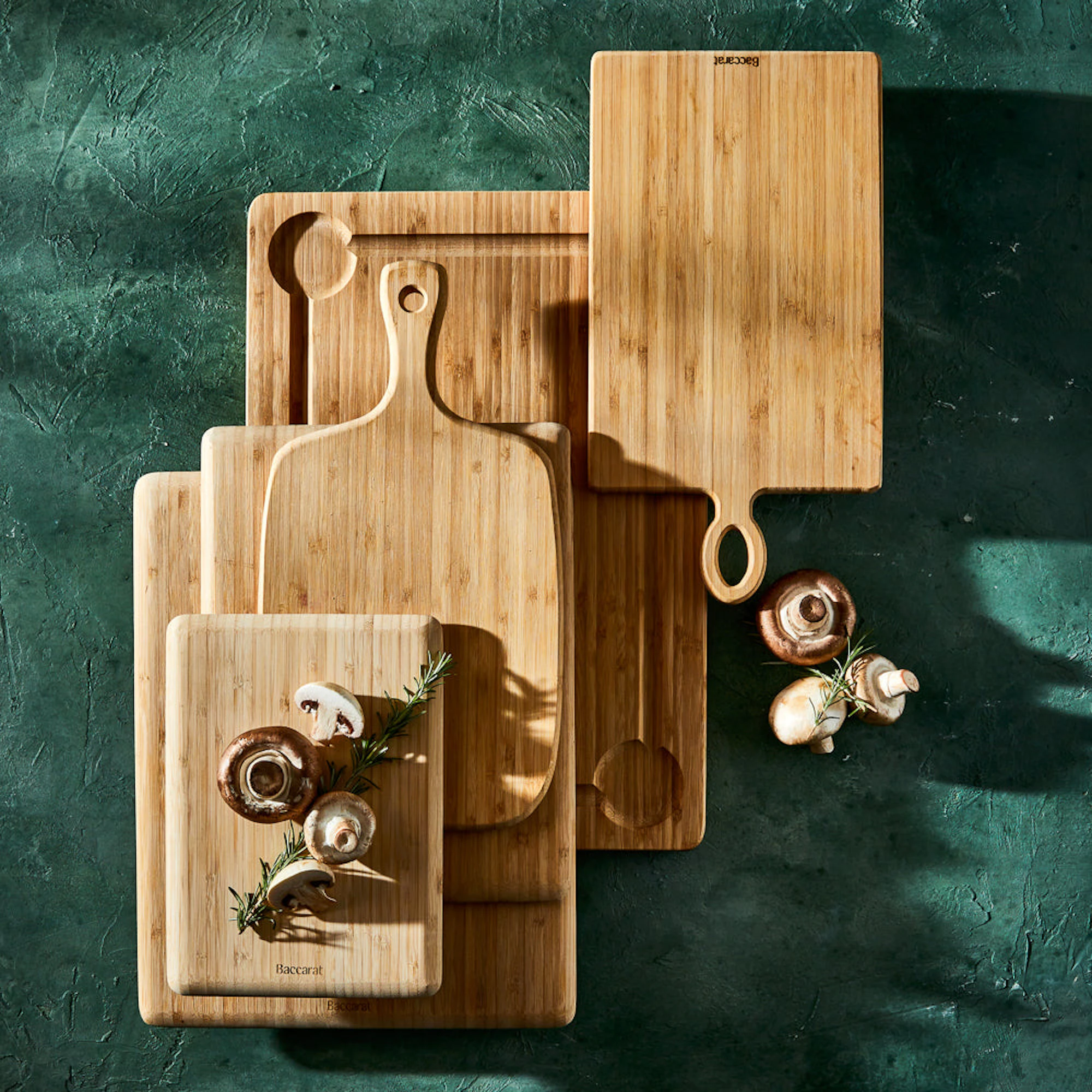
Is wood really more hygienic than plastic?
Not necessarily. Both a wooden chopping board and a plastic chopping board can be hygienic when properly cleaned and maintained, and surface condition matters as much as material.
Research led by UC Davis food-safety researcher Dean Cliver challenged the assumption that plastic was automatically safer. His work found that bacteria placed on new wood became undetectable within a short time, while bacteria remained recoverable from plastic surfaces. Once plastic became heavily knife-scarred, it could also become difficult to clean effectively.
That doesn’t make wood “self-sanitising” in every situation. NC State food-safety researchers note that fine-grained hardwoods can draw moisture and bacteria below the surface through capillary action, where bacteria are killed as the board dries. They recommend plastic for raw meat because it sanitises more easily, with wood better suited to produce and ready-to-eat foods.
The practical takeaway? Keep either material clean, dry it thoroughly and replace boards once deep grooves become difficult to clean.
More importantly, use a separate board for raw meat, poultry, and seafood, and another for produce, bread, and other ready-to-eat foods. The USDA also recommends this separation to reduce cross-contamination.
Wood vs plastic vs bamboo, at a glance
Every material gives something up: wood can't go in the dishwasher, plastic chopping boards blunt your knives faster, and bamboo is harder on a blade than it looks. If you're weighing up a plastic vs wood chopping board, with bamboo as the third option, here's how they stack up:
- Solid wood (e.g. acacia): Best for long-term use and protecting knife edges. Gentle on blades. Not dishwasher safe. Hand wash without soaking, oil monthly and dry standing up.
- Plastic (polypropylene): Best for raw meat prep and easy dishwasher cleaning. Wears knife edges faster than wood. Dishwasher safe. Replace once deeply knife-scarred.
- Bamboo: Best for a wood-like look at a lower price. Harder on knife edges than many solid woods. Usually not dishwasher safe, so check the care instructions. Hand wash without soaking, oil occasionally and dry flat.
Plenty of kitchens end up with more than one. Browse the Chopping Boards collection to compare your options.
Bamboo isn't just “eco-friendly wood”
A bamboo chopping board might look and feel similar to wood, but the two materials behave differently under a knife. Bamboo has a firm cutting surface that can wear down a sharp blade faster than many solid wood boards.
On the Janka hardness scale, which measures resistance to indentation, bamboo sits around 1,380, compared with roughly 1,450 for hard maple and 1,010 for black walnut. Hardness isn't a direct measure of knife wear, but bamboo's firm surface and natural silica content can make it harder on knife edges than many solid woods.
Bamboo boards are often lighter and more affordable than solid wood alternatives. Their laminated construction can also provide good dimensional stability, making them a practical option if you like the natural look of wood without the extra weight or price.
The main thing to watch is water. Bamboo boards are typically made from glued strips, which can begin to separate if repeatedly soaked or left wet. Although some products are dishwasher safe, handwashing and thorough drying are generally the safer approach for bamboo.
Bamboo makes sense if you want a lighter, lower-cost alternative to solid wood and don't mind sharpening your knives a little more often. If preserving your knife edges is the priority, solid wood is generally the better choice.
Keeping whichever board you choose in good shape
The best way to clean a wooden chopping board is to wash it by hand and dry it thoroughly after use. Avoid soaking it or putting it in the dishwasher, as this can cause warping or cracking. Most plastic and polypropylene boards, on the other hand, are dishwasher safe. Always check the manufacturer's care instructions for your particular board.
Wooden boards also benefit from regular oiling. Start with a clean, completely dry board, then apply a thin, even layer of food-grade mineral oil using a soft cloth or paper towel. Let it soak into the wood and repeat monthly.
After every use, wash and dry your boards thoroughly, particularly after preparing raw meat, poultry or seafood.
Finally, know when it's time for a replacement. Deep grooves that are difficult to clean, cracks in wooden boards or separating layers in bamboo boards are all signs that a board has reached the end of its useful life.
Building out your prep station
Two boards is the minimum for a safer kitchen: one for raw meat, poultry and seafood, and one for fruit, veg, bread and other ready-to-eat food. Colour-coding can make that separation easier to remember, particularly in a busy family or shared kitchen. You might also find a smaller board useful for quick jobs, while keeping a larger one for everyday meal prep.
Whatever the size, your board should sit securely on the bench and give you enough room to work without ingredients constantly falling over the edge. If a board tends to move while you chop, look for one with non-slip edges or feet rather than trying to steady it as you work.
If bench space is tight, a board set with its own stand keeps everything upright and drying properly between uses. And don’t forget the other half of the equation: your knives. The right board can help protect the blade, but regular care still matters. Our Kitchen Knife Guide covers the different knife types, what they’re used for and how to look after them.
Chopping board FAQs
Is a wooden chopping board more hygienic than a plastic one?
Not necessarily. Both wood and plastic can be hygienic when properly cleaned and maintained. Whatever the material, deep knife grooves can trap moisture and bacteria, making a board harder to clean properly. Replace heavily scarred boards and keep separate boards for raw meat and ready-to-eat foods.
Can you put a wooden or bamboo chopping board in the dishwasher?
Generally, no. Hand-wash wooden or bamboo chopping boards rather than putting them in the dishwasher, as prolonged heat and moisture can damage the material. Always check the manufacturer’s care instructions for your particular board.
Does bamboo dull knives faster than wood?
Yes, bamboo can dull a knife edge faster than many solid woods because it provides a harder cutting surface. If keeping your knives sharp for longer is a priority, a quality solid wood board is generally the more knife-friendly option.
How often should I oil a wooden chopping board?
Around once a month is a useful guide for a regularly used wooden chopping board. Apply food-grade board oil to a clean, completely dry surface, allow it to soak in, then wipe away any excess.
Back to blog