How to Organise Your Pantry: Containers, Canisters and Labelling
Open a pantry, and you’ll usually find a few familiar characters: the half-open packet shoved behind the flour, three different bags of rice and somehow, another jar of cumin. Without a bit of pantry organisation, ingredients get pushed into every crevice, perfectly good food gets forgotten, and you end up with various unnecessary double-ups.
You don't need to decant everything into matching containers to fix it, either. You just need a system that makes it easier to see what you have, find what you need, and put things back where they belong. This guide shows you how to arrange your pantry, from the initial clear-out to choosing the right containers, canisters and sizes for different staples. You'll also learn how to label and organise pantry shelves so the whole household can keep the system going.
Start by emptying it out
The best way to organise a pantry is to start with an empty one. Take everything off the shelves, wipe them down, then sort what you've removed into three groups: keep, use soon and bin.
Check best-before and use-by dates as you go, and keep anything that needs using soon somewhere visible rather than putting it straight back into the pantry. You'll have a much better idea of what you regularly buy, what you've forgotten, and what you have too much of.
Do this before buying containers. You can't choose the right number or sizes until you know what you're actually storing.
Work out what to decant, and what to leave alone
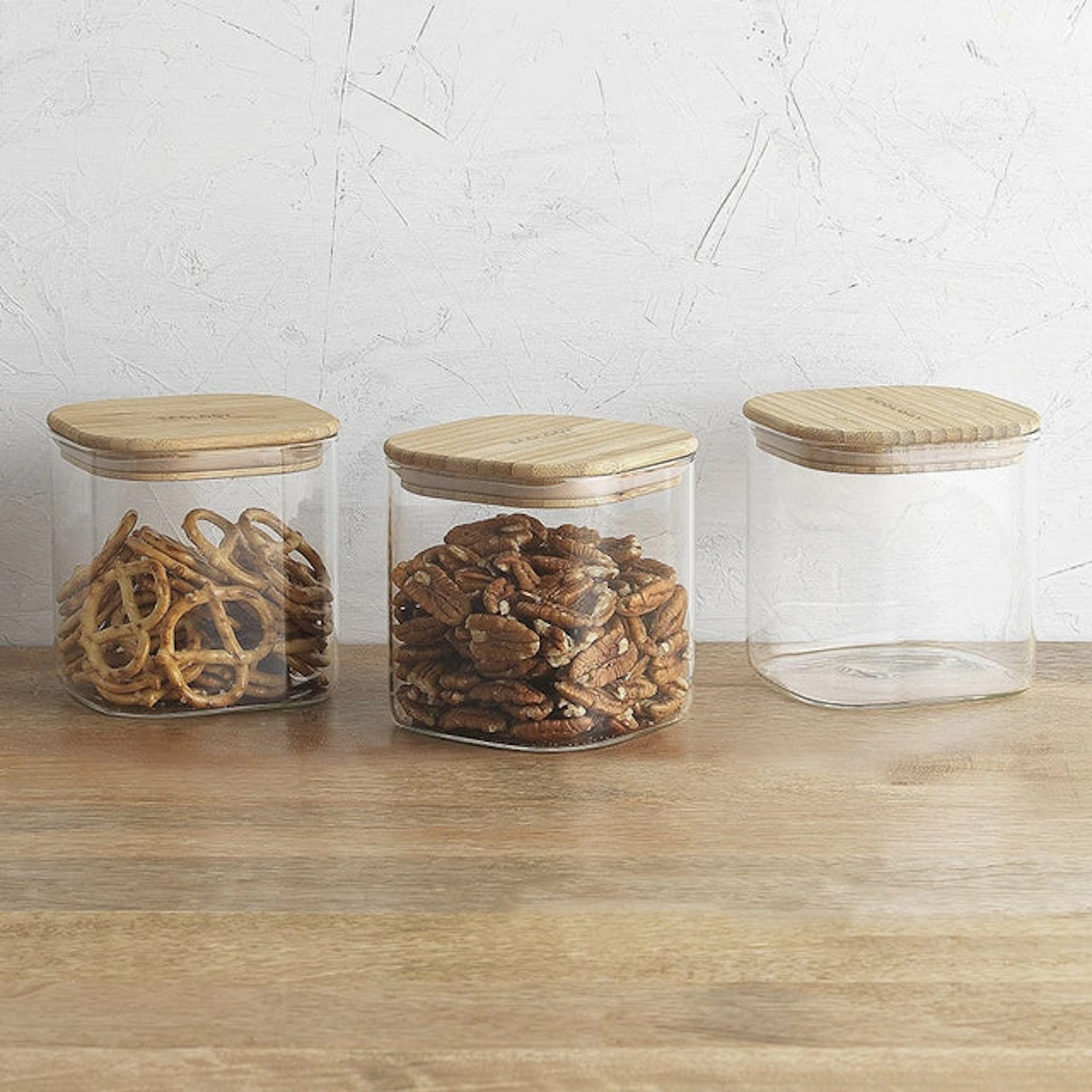
Start with a couple of large containers for staples such as flour and rice, several mid-size containers for pasta, cereal and sugar, and a handful of smaller ones for nuts, dried fruit and baking ingredients.
Shape matters also, particularly when you organise pantry shelves with limited space. Rectangular containers can sit flush against one another and closer to the back and sides of a shelf, while round canisters leave small gaps between them. The Ecology Store Rectangle Glass Food Containers, for example, use a space-saving rectangular shape that can make better use of a deep pantry shelf.
Browse Storage Canisters & Containers to compare sizes, shapes and materials for your pantry.
Which container material suits which staple?
Clear plastic suits everyday dry goods, glass suits anything oily or strongly scented, and ceramic or dolomite suits bench-top staples you refill often but don't need to see through.
Clear plastic, for everyday dry goods
Clear plastic containers work well for frequently used dry goods like snacks, cereal and anything the whole household reaches for. Because they're lightweight, they’re easy to stack and let you check stock levels without opening them. They're also easier for children or shorter household members to lift from a shelf than heavier glass canisters.
What to watch for: Odours and staining over time. Lighter containers may tip more easily when tall and partly full.
Care instructions: Usually hand wash, but always check the specific set’s product details.
Glass, for flour, sugar and anything oily
Borosilicate glass resists stains and food odours, making it useful for oily or strongly scented ingredients. It also holds a decent amount for a shelf container; canisters in this range can run large enough to fit a full bag of flour or sugar into one container instead of splitting it across two.
What to watch for: The extra weight, especially on high shelves.
Care instructions: Dishwasher suitability will depend on the lid. Check the product details for confirmation.
The Scullery Bamboo 6 Piece Square Canister Set combines stackable borosilicate glass canisters with airtight bamboo lids for pantry or bench storage. The Ecology Store Rectangle Glass Food Containers pair borosilicate glass bodies with glass-and-silicone lids and are leak-proof and BPA-free. Their rectangular shape also uses shelf and fridge space efficiently.
Ceramic and dolomite, for the bench-top three
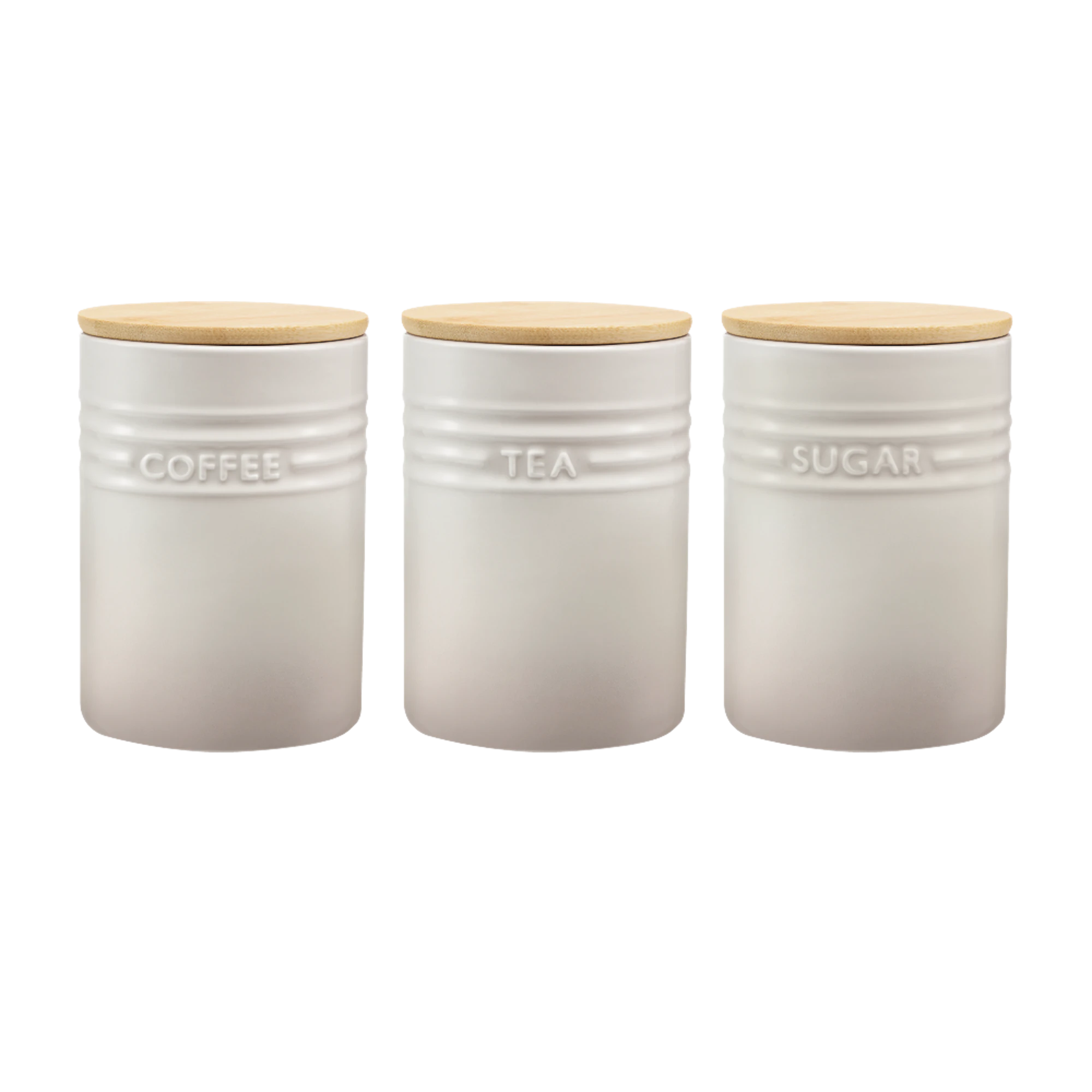
Ceramic and dolomite canisters work well for tea, coffee and sugar sitting out on the bench, where you're refilling regularly rather than checking stock levels. Some sets have the contents embossed directly into the canister, so there's no separate label to lose or wear off.
Ceramic and dolomite canisters work well for tea, coffee and sugar sitting out on the bench, where you're refilling regularly rather than checking stock levels. Some sets have the contents embossed directly into the canister, so there's no separate label to lose or wear off.
What to watch for: Being opaque, so you can't check how much is left without opening the lid.
Care instructions: Often hand wash recommended, but check the specific product details.
The Baccarat Le Connoisseur Canister Set of 3 is made from dolomite with bamboo lids, with tea, coffee and sugar embossed directly onto the canisters. In this case, the containers effectively label themselves. The canisters are dishwasher-friendly, although hand washing is recommended, while the bamboo lids should be hand washed only.
The lid rule most guides skip
The lid decides how a canister gets cleaned as much as the container does, which is why three canisters on the same shelf can have three different washing instructions.
Glass and silicone lids, such as those on the Ecology Store Rectangle Glass Food Containers, can go in the dishwasher along with the containers. The Salt & Pepper Store Canister has a dishwasher-safe borosilicate glass vessel but a beechwood lid that needs gentle hand washing. Bamboo lids, including those used on the Scullery and Baccarat sets above, need to be hand washed.
Timber and bamboo shouldn't be repeatedly exposed to the prolonged heat and moisture of a dishwasher. This can dry out or warp the material and compromise the lid's fit and seal over time.
Before buying, check the care instructions for both the container and lid. If hand washing is unlikely in your household, that may be as important as choosing the right size or material.
- Glass or silicone lid: dishwasher safe where specified
- Beechwood lid: hand wash the lid; dishwasher for the glass where specified
- Bamboo lid: hand wash only
- Plastic lid with a toggle or clip seal: check the individual set; many require hand washing
Labelling that lasts
A consistent labelling system makes pantry organisation easier to maintain because everyone in the household can see what belongs where. The name is only part of the information worth keeping.
For decanted ingredients, consider adding the best-before date from the original packet or the date you decanted it. Also keep any cooking ratios or instructions you'll need later. Rice, custard powder and pancake mix are easy examples of foods where useful directions can disappear along with the packaging.
Where you place the label depends on how the container is stored:
- On a shelf: put the name on the front so it's easy to read.
- In a deep drawer: label the lid so you can identify the contents from above.
- For dates: use the base or another discreet spot that you can update without replacing the main label.
Keep the position, style and font consistent, so nobody's hunting through three shelves asking where the flour went.
If you prefer not to add separate labels, some canisters identify the contents for you. The Baccarat Le Connoisseur Canister Set of 3, for example, has tea, coffee and sugar embossed directly onto the canisters.
Putting it back so it stays that way
Pantry organising works best when you group foods by how you actually use them. Keeping breakfast staples together, baking ingredients in one area and school snacks in another can make everyday cooking and packing quicker than arranging everything by food type alone.
Put the things you reach for most at eye level, occasional ingredients higher up, and heavy or bulk items on lower shelves. For duplicate products, follow a simple first-in, first-out rule: put new stock behind what you already have so you use the older item first.
Clear containers make restocking easier because you can see what's running low without pulling everything off the shelf. Baskets, shelf risers, and turntables can also make packets, tins, and items at the back easier to reach.
Browse Pantry Storage Solutions for more ways to make use of your available shelf space.
Back to blog