Bakeware & Cake Tins: The Tins and Trays Worth Owning
Standing in front of a wall of cake tins and baking trays, it can be hard to know where to start. Do you need a springform pan, a loaf tin, a muffin tray or an entire bakeware set?
You don’t need a cupboard full of bakeware to get started. A handful of versatile tins will cover most home baking, and you can add more specialised pieces depending on what you like to bake. We’ll look at which tins are worth owning first, when a springform makes more sense than a fixed-base tin, and how to choose the right sizes and materials for your baking style.
The core tins worth owning first
For most home bakers, four pieces will cover almost everything: a round cake tin, a loaf tin, a muffin tray and a flat baking tray. Start with these before adding speciality shapes that you may only pull out a few times a year.
A round cake tin handles sponges, layer cakes and everyday celebration cakes. If you’re starting from scratch, a set of three round tins in different sizes covers whatever the recipe calls for. A loaf tin takes care of banana bread and pound cake, and a muffin tray covers muffins, cupcakes and lunchbox-sized bakes.
Don’t overlook a flat baking tray, either. It’s one of the most versatile pieces in the kitchen, useful for biscuits, traybakes and plenty of baking beyond cakes.
- Round cake tin: classic layer cakes and sponges. Usually aluminium with a non-stick coating.
- Loaf tin: banana bread, loaf cakes and pound cake. Comes in metal or silicone, with silicone versions often reinforced with steel.
- Muffin tray: muffins, cupcakes and portioned bakes. Comes in metal or silicone, with silicone trays usually built on a steel frame.
- Baking tray: biscuits, traybakes and flat bakes. Often carbon steel, sometimes with a vitreous enamel finish.
Once you have these basics covered, you can add a springform or speciality tin based on what you actually like to bake. Browse the Robins Kitchen Cake Tins & Baking Pans collection to start building your kit.
Springform vs a fixed-base cake tin: when you actually need each
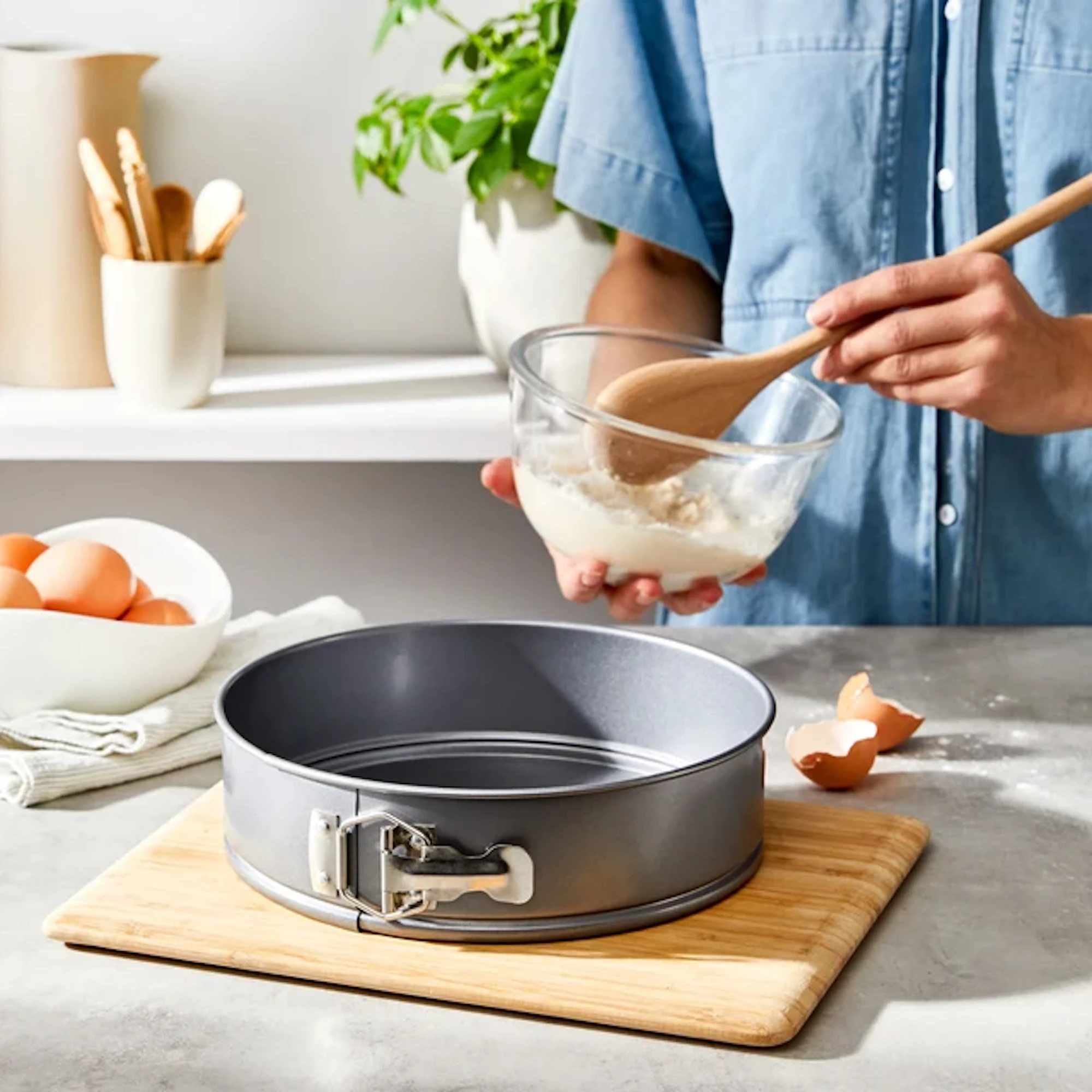
A springform pan has sides that unclip from the base, so you can remove the cake without turning or flipping it. A fixed-base cake tin is sturdier and better suited to everyday sponges, layer cakes and other cakes that release easily once baked.
The easiest way to choose is to think about how the finished bake needs to come out of the tin. For cheesecakes, tortes and anything delicate enough to crack or collapse when flipped, a springform makes life much easier. Once the bake has cooled, you release the clip and lift the sides away, leaving it sitting on the base.
For everyday cakes, a fixed-base tin will usually do the job. Grease and line it as directed by your recipe, then loosen the edges before turning the cake out. With fewer moving parts and no join between the base and sides, it’s a straightforward option for the cakes you’re likely to bake most often.
You may also come across loose-bottom tins. These sit somewhere between the two: the base can be pushed up and removed, but the sides don’t unclip as they do on a springform. They can make releasing cakes easier, although they’re not essential if your existing fixed-base and springform tins already cover the way you bake.
Picking a cake tin size that matches your recipe
Start with the cake tin size stated in your recipe whenever possible. If you need to substitute, choose a tin with a similar depth and adjust the baking time to account for the size change.
A smaller tin holds the batter in a deeper layer, so the centre generally takes longer to bake. A larger tin spreads the same amount of batter more thinly, so it usually bakes faster. Rather than automatically changing the oven temperature, start checking the cake earlier when sizing up and allow extra time when sizing down.
The colour and material of the tin can make a difference too. Darker metal tins absorb more heat than light aluminium and can brown the outside of a cake faster. Depending on the recipe, you may need to reduce the oven temperature slightly or start checking the cake a few minutes earlier when using a dark tin.
If you don’t have the exact size a recipe specifies, sizing up is generally safer than squeezing the batter into a smaller cake tin. Too much batter can rise over the sides before the centre is cooked, while a slightly larger tin simply produces a shallower cake that may be ready sooner.
Materials, non-stick coatings and keeping bakeware working
Non-stick bakeware is safe for normal baking when you use it as directed, and the bigger risk is scratching the coating or overheating an empty tin. The bigger concern is damaging the coating with metal utensils or overheating an empty tin, so following the care instructions will help it last longer.
Material also changes how a tin behaves in the oven. Metal conducts heat efficiently and holds its shape, making it a reliable choice for cakes and other bakes where even browning matters. Silicone is more flexible, which can make muffins, loaf cakes and other bakes easier to release without sticking. That flexibility does come with a trade-off. Silicone doesn’t conduct heat in the same way as metal and can be less rigid when filled with batter.
Even with a non-stick cake tin or loaf tin, don’t assume the coating will do all the work. For delicate bakes, particularly cheesecakes and sponges that need to come out cleanly, grease and line the tin as the recipe directs. Avoid cutting directly in a coated tin or using metal utensils that could scratch the surface.
If loaf cakes and breads are regulars in your kitchen, browse the Robins Kitchen Loaf Tins collection to compare materials and sizes.
Beyond the basics: bundt tins, bakeware sets and finishing pieces
Once you have the core tins covered, you can start adding pieces that suit how you like to bake. A bundt tin, a complete bakeware set and a cooling rack are useful next additions, but you don’t necessarily need all three from day one.
A bundt cake tin is worth considering if you enjoy baking cakes for birthdays, afternoon teas or when friends and family are coming over. Its moulded shape creates a decorative finish as the cake bakes, so a dusting of icing sugar or simple glaze may be all it needs. If you’re setting up a kitchen from scratch, buying a set can make more sense than collecting individual pieces over time.
Then there’s the piece that’s easy to forget: the cooling rack. Moving cakes, biscuits, and other bakes onto a rack lets air circulate underneath as they cool.
Browse the Robins Kitchen Cooling Racks collection for more options, or head to the full Bakeware collection when you’re ready to add to your kit.
Back to blog