How Many Different Spoons Do You Need? Choosing the Best Cutlery Set for Your Kitchen
There comes a point where choosing cutlery stops being as simple as forks! knives! spoons! and starts demanding an unreasonable amount of knowledge for something that lives in a drawer. How many pieces do you need? Is 18/10 actually different? Do you really need a soup spoon? And why does one set say dishwasher safe while another tells you to wash it by hand?
Good news! You don’t need a degree in silverware to work it out. Consider this guide as your cheat sheet to finding the best cutlery set for your kitchen. By the end, you’ll know what a sensible set looks like for your household, which extras deserve drawer space and what those stainless steel grades and finishes mean for everyday use.
How many pieces do you actually need?
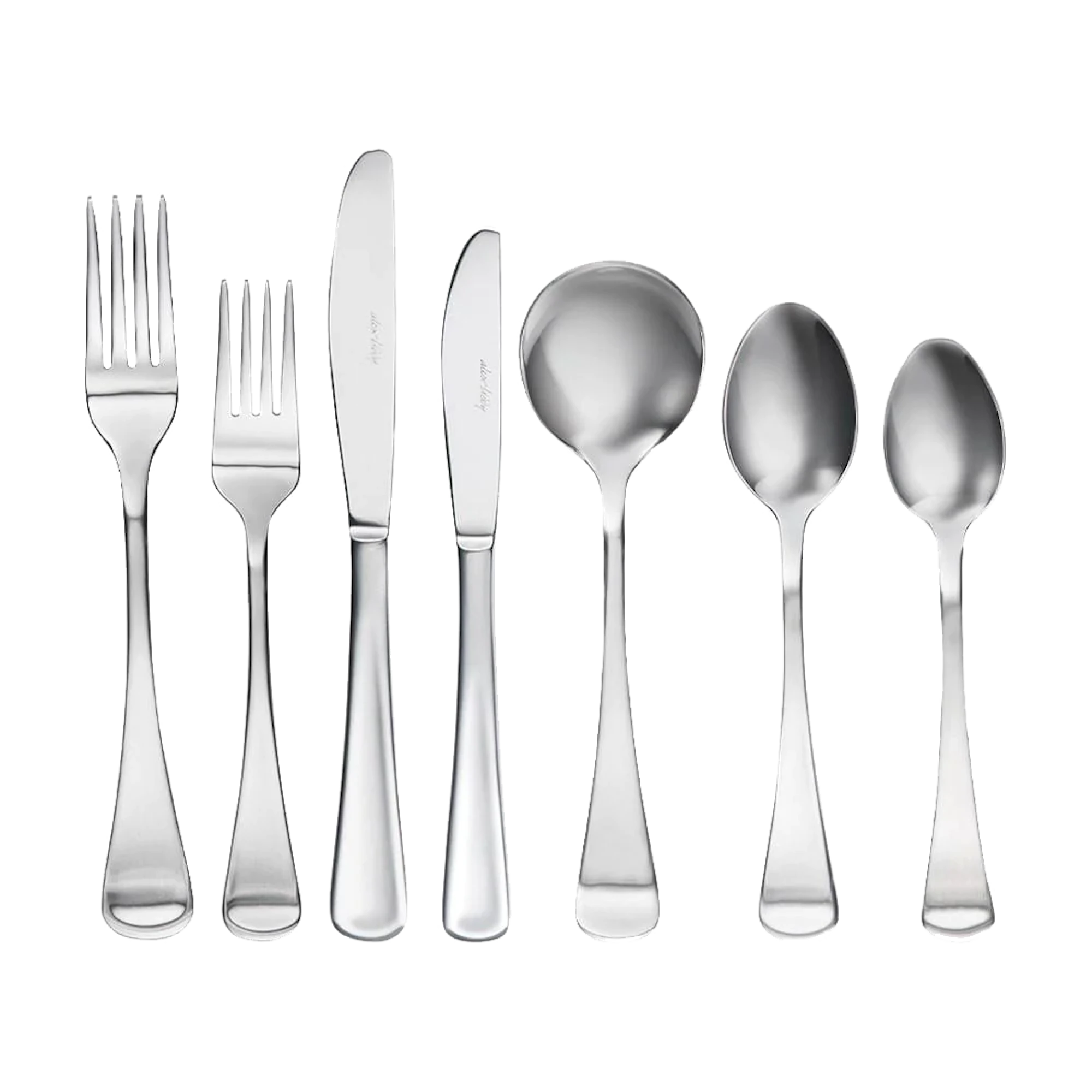
For everyday eating, you really only need two types of spoons: a teaspoon and a dessert spoon. Every standard cutlery set in the Robins Kitchen range, from 16-piece to 40-piece sets, includes both.
The other spoon types are more specialised. A soup spoon has a deeper, rounder bowl that makes eating soup easier, while a table spoon or serving spoon is larger and intended for serving food from a shared dish. A soda spoon has a long handle for reaching into tall glasses, making it useful for iced drinks, sundaes and parfaits.
Here’s what each one is for:
- Teaspoon: Included in standard sets; tea, coffee and small desserts.
- Dessert spoon: Included in standard sets; desserts, cereal and everyday meals.
- Soup spoon: Usually bought separately; deeper, rounded bowl for soup.
- Table spoon or serving spoon: Usually bought separately; serving food from a dish.
- Soda spoon: Usually bought separately; long handle for tall drinks and parfaits.
Rather than hunting for a set containing every spoon type, start with enough teaspoons and dessert spoons for your household. If soup is a regular on the menu, add two to four soup spoons separately. A serving spoon is also worth adding if you regularly put shared dishes on the table.
Browse the spoons collection for the extras your everyday set doesn’t cover.
Stainless steel grade: is 18/10 worth paying for?
18/10 stainless steel is worth the extra cost if you want cutlery that retains its shine and resists corrosion and spotting over years of regular use. But if your cutlery spends most of its life ferrying pasta, roast chicken and Tuesday-night leftovers, 18/0 is still a solid everyday option.
The numbers refer to the steel's composition. 18/10 stainless steel silverware contains approximately 18% chromium and 10% nickel. Chromium helps stainless steel resist rust and corrosion, while nickel adds further corrosion resistance and gives the cutlery a brighter, polished appearance.
Standard stainless steel cutlery, often marked 18/0, contains chromium but no nickel. It still offers good rust resistance for everyday use, but may not retain the same level of shine over years of regular washing.
Grade isn’t the only quality cue worth checking, though. There’s one test no shiny product photo can pass for you: just pick it up. A stainless steel cutlery set made with thicker-gauge steel will generally feel more substantial and well balanced in the hand. If you’re shopping in-store, pick up a few pieces and see which one feels like it belongs in your hand. If you’re browsing online, check the listed weight where available.
What else should you look for?
- 18/10 stainless steel: Best for keeping that bright, polished look through years of use. Expect a higher upfront cost. Care: dishwasher safe.
- Standard stainless steel (18/0): Best for straightforward, everyday cutlery that can handle the daily grind. The shine may fade sooner with regular dishwasher use. Care: dishwasher safe.
- Gold or black titanium/PVD coating: Best for adding a little more personality, especially when guests arrive. Repeated dishwasher cycles can wear the coating. Care: hand wash recommended.
Finish and the care rule most guides skip
The finish rather than the stainless steel itself is often what determines how your cutlery should be washed. Two sets can be made from the same quality stainless steel yet have completely different washing recommendations.
Plain mirror-polished stainless steel can go straight in the dishwasher, while a gold titanium-coated finish needs hand washing to protect that coloured coating.
The reason is pretty simple: a coloured or coated finish sits on top of the stainless steel, and repeated dishwasher cycles expose it to heat and detergent that can gradually wear the coating long before the steel underneath is affected. Plain stainless steel has no extra layer to worry about.
Before buying, check whether you're choosing polished stainless or a coloured finish rather than assuming every stainless steel set can be treated the same way.
- Mirror-polished stainless: Dishwasher safe
- Satin or brushed stainless: Dishwasher safe; water spots can show more visibly
- Gold or black titanium/PVD coating: Hand wash recommended to help protect the coating
Steak knives: included, or bought separately?
Steak knives are included only in some larger cutlery sets, but they’re not a standard extra, so check the piece list first. Some 40-piece sets include eight steak knives alongside eight place settings; however, most 16- and 24-piece cutlery sets will just stick to the everyday essentials.
If steak or roast dinners are regulars at your table, a dedicated set is a handy addition. Their sharper, purpose-built blades make short work of cutting through meat, unlike the standard table knife in your everyday set.
That doesn’t mean you need to buy a larger cutlery set just to get them. Choose your main set based on the number of place settings you need, then add steak knives separately if you’ll actually use them.
Keeping it all sorted once you’ve bought it
If you’re replacing a jumble of old forks and odd teaspoons, the last thing you want is your shiny new set to end up the same way. Loose cutlery can rub against itself, scratching polished finishes and knocking knife edges every which way. Plus, an overly packed drawer makes finding literally anything harder than it needs to be.
For a 16-piece everyday set, a simple compartment tray is usually enough to separate knives, forks and spoons. Once you start adding soup spoons, serving pieces or steak knives, a larger or expandable organiser gives everything its own place and makes the drawer easier to use.
Need to tackle the rest of the kitchen too? Our guide to organising your kitchen has more ideas. And once the drawer is sorted, our guide to mastering the art of table setting will show you where all those pieces go when it’s time to use them.
Back to blog